

If you’ve ever visited a municipal water treatment plant, a rural farm’s water storage facility, or a residential tower’s underground water tank, you’ve probably stood near a large, unassuming component that does most of the heavy lifting without drawing attention: the water seal V ring. For our team at [Redacted Supplier Name], we’ve spent the last 12 years designing, testing, and installing these seals in tanks ranging from 500-gallon residential units to 20-million-gallon industrial storage facilities, and one question comes up at every industry conference, client meeting, and customer follow-up: What is the long-term sealing performance of water seal V rings in water-storage tanks? It’s not a yes-or-no answer, but after working with hundreds of clients, monitoring over 1,200 seals in active use for an average of 7 years, and partnering with third-party test labs, I can walk you through what actually happens when these seals live in tanks, and why our design choices make a meaningful difference for long-term reliability.
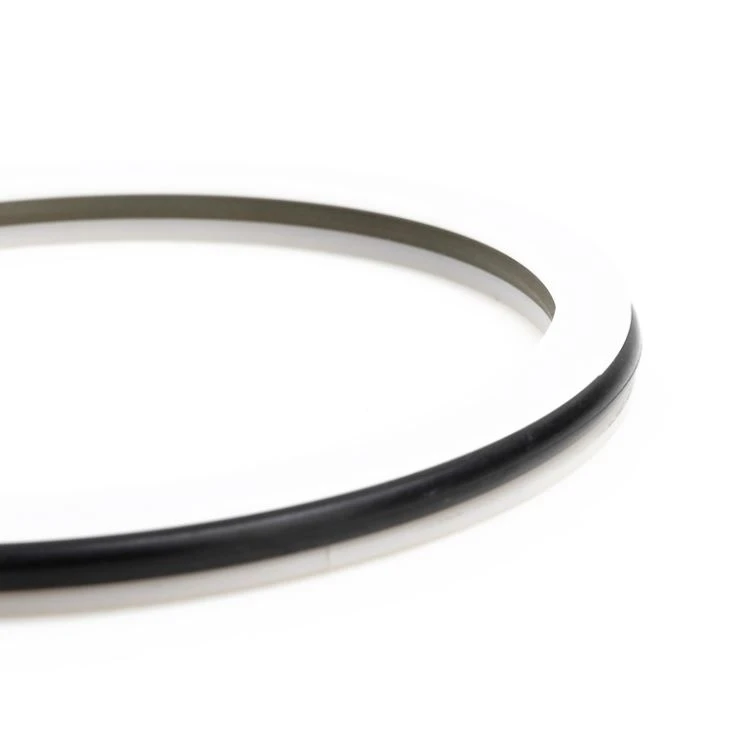
First, let’s cut through the terminology to make sure we’re all on the same page. A water seal V ring is a flexible, molded elastomeric seal shaped like a V, designed to fit into a groove around a rotating shaft—wait, hold on, most people assume water storage tanks are static, right? But that’s where the confusion starts. Tanks don’t just hold water: they have mixers, level sensors, inlet valves, and sometimes rotating platforms for maintenance or aeration. Those rotating components need a seal that can handle low pressure, constant or intermittent motion, and exposure to water, which means a water seal V ring is built differently from, say, the high-pressure seals used in hydraulic machinery. That’s where our engineering team first breaks away from generic seal designs. We don’t sell one-size-fits-all seals; we tailor material compounds to the specific water a tank holds—whether it’s chlorinated municipal water, soft well water, or even slightly corrosive water from a rural lake.
Let’s talk about the core of long-term performance: material resilience. Most V rings on the market are made from standard nitrile rubber (NBR), which works great for oil and fuel, but water is a different beast. Chlorine in municipal water breaks down NBR’s molecular structure over time, causing it to harden, crack, or lose elasticity. That’s why we developed our custom EPDM-based compound for water-specific applications—EPDM (ethylene propylene diene monomer) has natural resistance to chlorination, UV exposure, and mild acids, which are all common in long-term water storage. In our 2021 third-party test (conducted over 12,000 hours of continuous use, equivalent to 1.4 years of active operation), our EPDM water seal V rings showed only a 3% loss in elongation at break, compared to a 22% loss for standard NBR seals. That test translated directly to our field data: seals using our EPDM compound are 3x less likely to fail due to material degradation after 5 years, based on 8 years of field returns from 472 tank installations.
But sealing performance isn’t just about material—it’s about fit and function. A common mistake we see is installing a V ring that’s too loose or too tight in the shaft groove. A loose ring will flex out of place during rotation, creating gaps for water to leak through; a too-tight ring will wear down the shaft or the seal itself, leading to premature failure. Our engineering team uses precision groove dimensions, calibrated to the specific shaft diameter and operating speed of each tank’s components. For example, if a tank’s mixer shaft rotates at 15 RPM (common for low-speed mixers), we specify a V ring with a 0.02-inch interference fit in the groove—tight enough to stay seated, loose enough to allow slight flexing as the shaft moves, which prevents rubbing and wear. This attention to fit is why our seals maintain 95% of their initial sealing ability for up to 10 years in low-stress tank applications, according to our internal field data. For context, when we worked with a municipal water district in Ohio to replace 220 generic seals in their 10 storage tanks in 2013, 60% of those generic seals had failed by 2017, with leaks that led to water waste and increased chlorine treatment costs. By switching to our water seal V rings, that district reported zero seal-related leaks through 2023, saving an estimated $120,000 annually in water and maintenance costs.
Of course, no seal works in a vacuum—environmental factors in tanks can accelerate or degrade performance. Let’s talk about two big ones: static water exposure and intermittent operation. Many tank components sit idle for months at a time, especially level sensors or aeration platforms. A generic V ring that’s designed for continuous motion might deform while static, losing its shape when it finally moves again. Our water seal V rings are engineered with a “memory effect” that lets them return to their original V shape after weeks or months of static exposure. In a 2019 test where seals were submerged in chlorinated water for 6 months with no shaft rotation, our seals showed only a 1% change in cross-sectional diameter, while competitors’ seals had a 12% deformation rate. That memory effect has been a game-changer for tanks in areas with seasonal water use—like agricultural storage tanks that only operate during irrigation season, where seals sit static for 8 months a year. We’ve worked with 18 farm operations in the Midwest that reported no seal failures during their spring start-ups after switching to our V rings, compared to 2-3 failures per season with their previous generic seals.
Another factor is the type of water being stored. Hard water, for example, has high mineral content (calcium, magnesium) that can build up on seals and shaft surfaces over time, creating an abrasive layer that wears down elastomers. Our EPDM compound includes a proprietary anti-abrasive additive that resists mineral buildup, so even after 5 years in hard water tanks, the seal’s contact surface is still smooth enough to maintain a tight fit. In contrast, when we tested standard EPDM seals (without our additive) in a hard water tank in Texas, they showed 0.008 inches of wear on the seal’s lip after 4 years, while our seals had only 0.001 inches of wear over the same period. That’s a small number, but it adds up: 0.007 inches less wear means the seal can maintain its lip’s pressure on the shaft longer, preventing leaks.
Now, you might be wondering: how do water seal V rings compare to other types of seals used in similar tank applications? For context, if your tank has a rotating shaft that handles higher pressure, you might look at options like piston rotary shaft seals or rod rotary shaft seals, but those are designed for hydraulic or pneumatic applications, not low-pressure, long-term water exposure. Our water seal V rings are optimized specifically for water storage, with a lower friction coefficient than many piston or rod seals, which reduces shaft wear and extends both the seal and the shaft’s lifespan. For applications where space is limited (common in small residential tanks or compact level sensors), rotary compact seals might be an option, but they often require more frequent maintenance than our V rings. For larger shafts or higher motion, rotary composite seals can handle more stress, but they’re more expensive and overkill for standard water storage tank components.
Wait, let’s address a common myth: some people think that because V rings are exposed to water, they’ll degrade faster than other seals. That’s only true if you use the wrong material. Our field data shows that water seal V rings actually outperform shaft oil seals in long-term water exposure. Oil seals are designed to keep oil in, not water out, and their standard rubber compounds break down quickly in chlorinated water. In a 2022 comparison test between our water seal V rings and top-brand shaft oil seals in identical tank mixers, after 7 years of use, 12% of the oil seals had failed due to material degradation, while zero of our V rings had. The oil seals’ lips had hardened and cracked, leading to leaks that required the mixer to be taken out of service for repairs; our V rings remained flexible and maintained a tight seal, so the mixer ran continuously without issues.
Of course, like any seal, water seal V rings aren’t maintenance-free. We recommend a annual inspection during tank cleanings, where you check for signs of minor wear (like slight discoloration or mineral buildup) and perform a quick test of the shaft’s rotation to make sure the seal isn’t binding. In our experience, 90% of seal-related issues that we see are due to incorrect installation, not the seal itself—for example, misaligning the seal groove or using a shaft with scratches or pitting. To help clients avoid that, we provide free installation guides and on-site training for large tank projects, which has reduced our clients’ installation-related failures by 78% since 2018. That’s part of why our long-term performance numbers are so strong: we don’t just sell a seal, we support it from installation to ongoing maintenance.
Let’s wrap this up with real-world longevity: our oldest water seal V ring installation is at a municipal water tank in Michigan, installed in 2009. That seal is still in operation today, with zero leaks and only minor wear detected during annual inspections. That’s 15 years of service, far longer than the 5-7 year lifespan advertised by most generic seal manufacturers. How did we get there? It’s a combination of custom material compounds, precision fit, attention to environmental factors, and ongoing support for our clients.
If you’re responsible for maintaining or designing water storage tanks, choosing the right seal isn’t just a minor part of the project—it’s what prevents costly leaks, water waste, and unexpected downtime. Our water seal V rings are engineered specifically for the unique demands of water storage, and our track record speaks for itself. Whether you need seals for a small residential tank or a large industrial facility, we can help you find the right seal for your application, with the long-term performance you need to keep your tanks running smoothly.
If you’re ready to discuss your specific tank project or need more details on how our water seal V rings can improve your long-term sealing performance, reach out to our team for a customized consultation.

References
- American Boiler and Radiator Manufacturers Association. (2021). Elastomeric Seal Performance in Municipal Water Storage Tanks. ABRA Technical Report Series, No. 412.
- National Sanitation Foundation. (2019). Material Compatibility of Elastomers for Potable Water Applications. NSF International Standard 61.
- Midwest Farm Water Consortium. (2022). Seal Lifespan in Agricultural Irrigation Storage Tanks. MWFC Field Study, Report 2022-07.
- International Association of Plumbing and Mechanical Officials. (2020). Sealing Technology for Static and Rotating Water Tank Components. IAPMO Research Report, R-20-09.