


Product Introduction
The JBF Teflon Slydway is a kind of wear-resistant material applied to machine tool guides or other linear motion guides. JBF guide tapes can effectively improve the accuracy of the guide rail, reduce damage caused by mechanical and lubrication failures, prolong the service life of mechanical components, save energy and improve stick-slip.
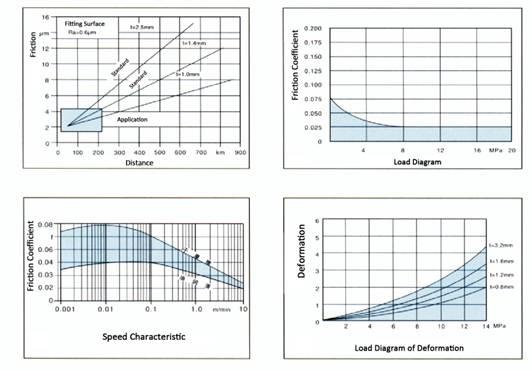
Characteristics of JBF Guide Tapes
Simple installation,good bonding performance.
Low wear under conditions of poor lubrication or no lubrication.
Shock resistant
Improve the accuracy of machine positioning
Chemical resistance to aggressive coolants & lubricants
Moisture resistance
Compatible with lubricating oils, greases and cutting fluids normally supplied with machine tools
Application Suggestion
JBF is a thin plate mainly composed of a fluorine compound, and is bonded to a rough-worked metal surface by a JB-1 adhesive after surface activation treatment. JBF is a material that combines with JB-1 adhesives by chemical etching. One side of the surface activation treatment of the JBF material is a uniform dark brown color that is easily discernible.

Installation of Machine Tool Guide Tapes
1. Installation tools/auxiliaries
1) JBF Guide Tape/Slydway
2) JB-1 Guide Tape Adhesive
3) Scraper
4) JINBOND Instruction Book
5) Cleaning Cloth(dry)
6) Absolute alcohol
7) Stirring Rod
8) Wax Paper or Plastic Films
9) Gloves
10) Clamps

Instruction of JBF Guide Tapes
* JBF machine tool guide anti-wear soft belt surface bonding
JBF is a thin plate mainly composed of a fluorine compound, and is bonded to a rough-worked metal surface by a JB-1 adhesive after surface activation treatment. JBF is a material that combines with JB-1 adhesives by chemical etching. One side of the surface activation treatment of the JBF material is a uniform dark brown color that is easily discernible.
* Preparation for sanding the surface
JBF machine tool guide anti-wear soft belt material - do not sand the treated JBF surface with sandpaper or roughen the treated JBF surface, otherwise it will reduce the bonding strength. Keep the bonding surface clean and dry without dirt and chemicals (including dirty fingerprints) because these factors can reduce bond strength.
It is important that the metal surface is properly ground to the metal bond surface for the bond strength. To achieve maximum bond strength, the polished metal bond surface roughness is 1.6 to 6.3 um. The polished or unground metal surface will weaken the bond strength and cause detachment at the bond position, which acts as a grease to penetrate the metal through the flame during maintenance.
* Clean bonding surface
JBF material is used to ensure that the JBF material is clean and free of dirt and oil. It is cleaned with acetone or absolute alcohol for at least three times. The oil and oil traces in the stains that do not completely remove the surface will cause the adhesive tape to peel off. When the ambient humidity is greater than 90%, the bond strength will decrease.
The metal surface is required to thoroughly clean the polished metal bonding surface in order to ensure satisfactory bonding. A minimum of three washes with acetone or absolute alcohol are required to ensure that the original dirt is completely removed. After cleaning, keep the metal surface and the JBF surface clean and free of any dirt before bonding.
Final preparation for JBF and metal bonding surfaces
After the JBF material surface and the metal bonding surface are cleaned and dried, they must be cleaned before bonding. Scrub a white, lint-free cloth moistened with acetone or JBF or absolute alcohol to remove any residual surface dirt. After the last scrub, the two surfaces should be completely air-dried and do not touch the two surfaces before bonding. After the final scrubbing, do not use compressed air to dry the surface, as there may be water or dust in the compressed air that will cause the bond to fall off.
* Prepare JB-1 adhesive
Jingbang's two-component JB-1 adhesive is the only specified adhesive because it provides maximum bond strength. According to the volume ratio A:B=1: (0.5~1), the glue is taken and mixed evenly in the open container or lithographic plate. The uniformly mixed adhesive should be used up as soon as possible, and the higher the temperature, the shorter the use time. The unused A and B components should be covered immediately.
* Adhesive bonding of two surfaces
A JB-1 adhesive is applied thinly and uniformly on both bonding surfaces with a zigzag blade. Too thin or too thick adhesive will reduce the bonding effect. After placing the JBF material on the metal joint surface, press it from one end to the other end, try to get out the bubble on the bonding surface, and apply pressure (0.05Mpa~0.1Wpa) to the two bonding surfaces with the clamp or fixture. It is about 24 hours. If the adhesive is used in an environment below 5℃, the curing time must be appropriately extended. Do not apply bonding in a -5℃ environment. |  |
* JBF material final finishing
After the adhesive is completely cured, the JBF material can be processed by a milling machine or a grinding wheel, or manually scraped. Coolant is generally not required during milling or grinding. When grinding with a grinding wheel, a grinding wheel and a coolant without a closed cover can be used to prevent overheating. The use of coolant during the grinding process facilitates a higher surface finish.
* Processing oil tank
In order to achieve the best performance of the JBF rail, a continuous film of lubricant must be provided and maintained between the mating surfaces. The depth of the oil groove milled on the surface of the JBF material should not exceed the thickness of the JBF material. A transition fillet is required on the side of the oil sump. It promotes oil flow from the oil sump through the surface of the JBF, helping to form a dynamic oil film. There are many possible tank design types that have been successfully applied by machine tool builders. The main requirement for designing the oil sump is to make the oil sump portion diagonally or perpendicular to the direction of movement. Such a design enables the lubricating oil to penetrate between the bonding faces. The processed oil sump shall not be less than 6 mm from the edge of the JBF material.
* Polished metal mating surface
The steel surface of the JBF material (generally referred to as the guide rail) has a surface finish of 0.4-0.8 um for optimum performance. Do not stack or light the JBF material with a metal fit (rail). This process produces slippage and increases friction during operation. For good performance, the surface area in direct contact between the rail and the flexible belt is maximized. The most ideal surface contact guarantees a uniform lubrication distribution and a uniform oil film thickness, which is advantageous for hydraulic transmission.
Sizes of Guide Tape
Standard | Customized | ||
Thickness | Width | Thickness | Width |
0.4mm-4.0mm | 120mm-300mm | 4.0mm-300mm | 0.2mm-6.0mm |
Hot Tags: PTFE guide band, China, suppliers, manufacturers, factory, wholesale, customized, buy, made in China, powered by guide elements, glued to guide elements, standalone guide elements, machining guide elements, available guide elements, aftermarket guide elements