

If you've ever watched a surgical robot move with pinpoint precision or a diagnostic centrifuge spin samples at exact, consistent speeds, you might not have paused to wonder what makes that motion possible. But behind every smooth, reliable movement in medical equipment are dozens of small, critical components-none more important than seals. For years, the medical industry relied on specialized, custom seals designed for single use or low-cycle applications, but as demand rises for reusable, cost-effective, and high-performance medical devices, a question keeps coming up: Can piston rod seals be used in medical equipment?
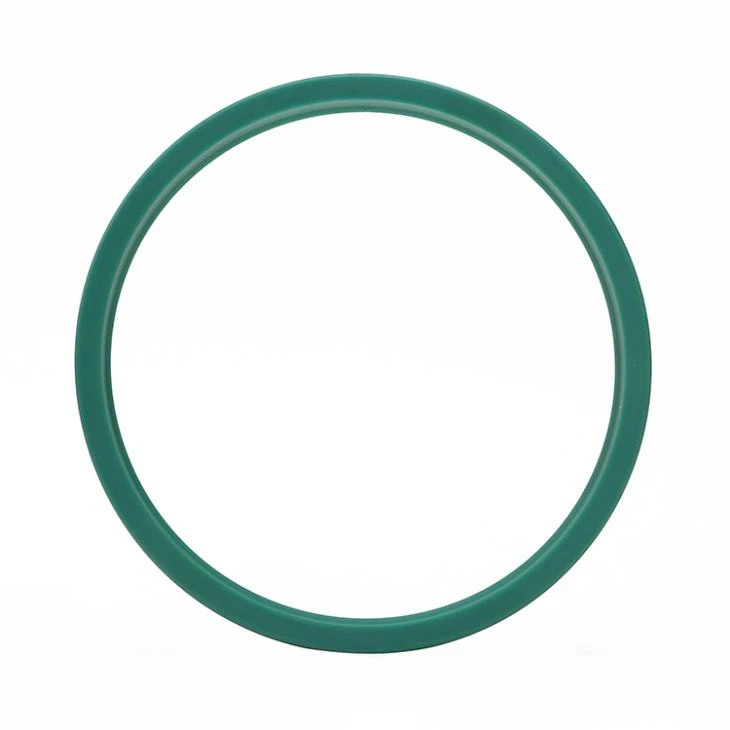

The short answer is yes-but not all piston rod seals are created equal. As a piston rod seals supplier, I get this question at least once a week, usually from biomedical engineers or procurement teams tired of overpaying for one-off seal parts that fail after a few dozen uses. To break this down, let's start with what piston rod seals do, why medical equipment has unique seal requirements, and which seal types work best for this highly regulated space.
First, let's define the basics. Piston rod seals are part of a hydraulic or pneumatic system, responsible for two core jobs: preventing fluid (oil, water, or air) from leaking out of the cylinder and keeping contaminants (dust, debris, or outside bacteria) from getting inside. In industrial machinery, they handle tough conditions: extreme temperatures, high pressures, and exposure to harsh chemicals. But in medical equipment, the stakes are way higher. A leaky seal in an anesthesia machine could mean lost pressure, putting a patient at risk. A contaminated seal in a lab centrifuge could ruin a batch of critical diagnostic samples. Even minor wear on a seal in a surgical robot can lead to imprecise movements that affect a procedure's outcome.
So, what makes medical seal requirements different from industrial ones? Let's list the non-negotiables: biocompatibility first. Any seal that comes into contact with patients, medical gases, or biological fluids can't leach harmful chemicals, degrade when sterilized, or harbor bacteria. That means standard industrial rubber seals, often made with additives or fillers, are almost always out. Then there's sterilization compatibility. Medical devices get autoclaved (high heat, steam), ethylene oxide (EtO) gas, wiped with harsh disinfectants, or gamma-irradiated. The seal material has to survive this repeatedly without cracking, losing flexibility, or changing size. Add to that cleanroom manufacturing standards, traceability requirements, and the demand for long service life in reusable devices-because replacing a seal mid-procedure or mid-test isn't just costly, it's dangerous.
Now, back to the original question: Are piston rod seals a fit? The key is choosing the right type, and there are several piston rod seal designs that meet medical industry needs perfectly. Let's walk through the most common ones, and why they work for medical applications.
First, hydraulic piston rod seals. You might think hydraulics belong in heavy construction equipment, but in medical settings, they're used in everything from patient lift systems (that move a hospital bed or surgical table) to fluid transfer pumps in IV infusion devices. Hydraulic piston rod seals are built to handle high pressure, and when made with the right materials, they're clean, durable, and compatible with common medical fluids like saline. As a supplier, our hydraulic piston rod seals are precision-engineered to maintain consistent pressure over thousands of cycles, which is exactly what you need for a hospital bed that gets adjusted multiple times a day or an infusion pump that delivers medication at a steady rate. You can learn more about these seals here: Hydraulic Piston Rod Seals.
Another great option is reciprocating vee packing seals, also called V ring sets. These are modular seals made of multiple V-shaped rings that stack together to create a tight, customizable seal. What makes them ideal for medical equipment is their versatility: they work in low- to high-pressure systems, and you can adjust the number of rings to match the exact application. For example, in a reusable surgical drill or a diagnostic imaging machine's moving parts, vee packing seals can be made from biocompatible materials that withstand repeated autoclaving without degrading. They also have self-adjusting properties-meaning as they wear slightly during use, they maintain their seal instead of leaking. If you're looking for a seal that balances flexibility and durability for reciprocating motion in medical devices, reciprocating vee packing seals are worth exploring: Reciprocating Vee Packing Seals V Ring Sets.
Piston rod U seals are another workhorse in medical equipment. U seals get their name from their U-shaped cross-section, which creates a tight seal against both the piston rod and the cylinder wall as the rod moves back and forth. They're lightweight, have low friction (which is key for precise, smooth movement in things like surgical robots), and are easy to install and replace-important for medical devices that need to be serviced quickly. Many of our piston rod U seals are made from medical-grade polyurethane, which is naturally resistant to abrasion, chemicals, and sterilization methods, making them perfect for applications like the joint mechanisms in robotic surgical systems or the fluid controls in portable X-ray machines. For details on these seals, check out our range: Piston Rod U Seals.
Finally, TPU oil seals. Wait, oil seals in medical equipment? It sounds counterintuitive, but many medical devices use lubricated hydraulic or pneumatic systems, and TPU (thermoplastic polyurethane) is an ideal material for seals that need to resist oil, wear, and sterilization. TPU is extremely tough, has excellent tensile strength, and is compatible with EtO sterilization, gamma irradiation, and even cold sterilants used in outpatient settings. For things like portable dialysis machines or lab automation equipment that needs to move continuously for hours on end, TPU oil seals provide consistent performance without the risk of leaking oil that could contaminate samples or come into contact with patients. Our TPU Oil Seals are designed specifically to meet medical material standards, so you don't have to worry about harmful leachables: TPU Oil Seals.
Of course, it's not just about the seal type or material. When we work with medical clients, we walk through three critical steps to make sure their seal is a good fit, because even the best seal in the wrong application will fail. First, material validation. We provide full documentation of our seals' biocompatibility (compliant with ISO 10993, the global standard for medical device biocompatibility), sterilization compatibility, and leachate testing. That's non-negotiable-medical regulators (like the FDA in the U.S. or CE in the EU) require this documentation before any seal can be used in a device. Second, application testing. We can test our seals under your exact operating conditions: pressure, temperature, cycle count, and sterilization method. For example, if a client is building a new surgical robot, we'll test our U seals to make sure they can withstand 10,000 cycles of autoclaving without losing their seal or changing size. Third, custom sizing and design. Many medical devices are unique, so off-the-shelf seals won't always work. We work with engineers to customize seal dimensions, hardness, and even add special features (like a dust lip to keep particles out) that meet the specific needs of their device.
I've seen first-hand how a good piston rod seal can make or break a medical device. A few years ago, I worked with a team that was developing a new portable insulin pump that used a small hydraulic system to deliver precise doses of medication. They were using a standard industrial seal that would fail after just a few hundred uses because it wasn't made for the repeated bending and sterilization the pump would undergo. We switched them to our medical-grade piston rod U seals, and the failure rate dropped to zero. That pump is now used by thousands of people around the world, and the seals have held up for years of daily use and regular disinfection.
Another example: a client making diagnostic centrifuges. Centrifuges spin at high speeds to separate blood, urine, and other samples, and any vibration or leak can throw off the sample results. They were using expensive, custom-made seals that took months to source and cost a fortune every time they needed to replace them. We suggested our reciprocating vee packing seals, which are more durable, easy to install, and meet all medical standards. They switched, and not only did they cut seal costs by 40%, but their device's uptime improved because the seals didn't fail mid-test.
Now, let's address the elephant in the room: cost. Medical equipment is already expensive, so it's understandable to worry that high-quality piston rod seals will push prices even higher. But here's the thing: custom, low-performance seals lead to more service calls, more device failures, and even liability issues if a seal causes harm. Our medical-grade seals might cost a little more upfront, but they have longer service life, meet all regulatory requirements, and reduce long-term costs. Plus, many of our seal types are available in standard sizes that work for common medical applications, so you don't have to pay for full custom design if you don't need to.
If you're a biomedical engineer, procurement manager, or device designer reading this, and you're wondering if piston rod seals can work for your medical equipment, the answer is almost certainly yes-so long as you choose the right type, material, and supplier. The key is to partner with a seal provider that understands both the technical needs of hydraulic/pneumatic systems and the strict regulations of the medical industry. That means a provider that can not only supply seals but also validate materials, provide testing data, and work with you to customize solutions if needed.
If you're ready to explore piston rod seals for your medical device applications, we can help. We have a team of medical seal specialists who can walk you through your options, provide sample seals for testing, and help you find the right seal that balances performance, compliance, and cost. Whether you're building a new surgical robot, upgrading patient lifts, or improving lab automation equipment, we have the experience and products to meet your needs.
Let's connect to discuss your specific requirements, so we can find the perfect seal solution for your medical equipment.
References
ISO 10993, Biological Evaluation of Medical Devices, International Organization for Standardization
FDA, Guidance for Industry: Sterilization of Medical Devices, U.S. Food and Drug Administration
European Committee for Standardization (CEN), Medical Devices - Requirements for Hydraulic and Pneumatic Systems, EN 980
Medical Plastics and Materials Association (MPMA), Medical Grade Elastomer Selection Guide