

Hey everyone, it’s Jake here, from the team that makes water seal V rings—we get questions about how these seals work with different shaft diameters all the time. A lot of folks new to industrial sealing wonder how a single seal type can handle everything from tiny machine parts to big heavy-duty shafts, right? So today, I’m breaking down exactly how water seal V rings adapt to varying shaft sizes, no fancy engineering jargon, just real stuff we’ve learned from working with guys who actually use these seals.
First, let’s start with the basics because I see a lot of people mix up seal types when they need something for a specific shaft. Water seal V rings, for those who might be new here, are these flexible, ring-shaped seals that wrap around a shaft to block contaminants, keep fluids in, and handle rotary motion. They’re different from standard shaft oil seals because they’re made for more wet, high-movement environments—think pumps, mixers, small industrial machines, even some food processing gear. If you’re looking for general rotary shaft solutions, we’ve got rod rotary shaft seals that cover a lot of linear and rotary small-shaft needs too, you can check those out over here: Rod Rotary Shaft Seals. That’s a good starting point if your shaft is on the smaller side, but today we’re focused on V rings specifically and how they fit whatever diameter you’re working with.
Now, the big question: how do water seal V rings adapt to different shaft diameters? Let’s get into the actual design tricks we use here. First off, size flexibility is built into their core structure, not just random trimming. Unlike rigid seals that only fit one exact shaft size, V rings are made with elastic, durable materials—usually nitrile or EPDM, both of which hold up to water and common industrial fluids— that stretch without tearing or losing their sealing grip. That’s a game-changer for shafts that are a tiny bit off-spec (we’ve all had a shaft that’s supposed to be 10mm but ends up 10.2mm, right?) and don’t want to have to order a whole new seal because of a manufacturing quirk.
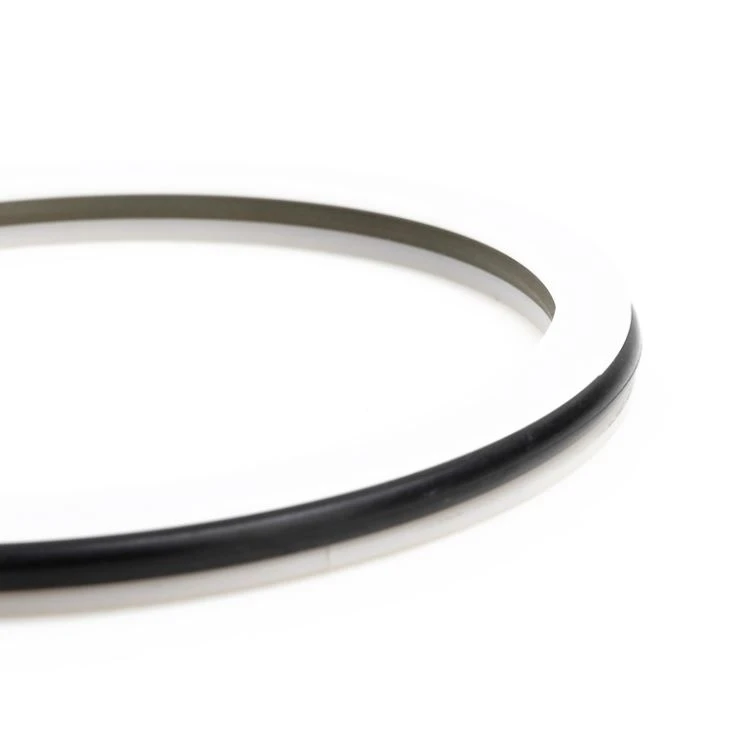
Wait, but it’s not just stretching. The way V rings are installed makes a huge difference too. Most V rings have a slight conical shape when they’re new, so when you push them onto a shaft, the material compresses a little on the inner diameter (the part that touches the shaft) and expands outward to press against the housing. For smaller shafts, you just stretch the ring a bit more to slip it on, and it holds its tension without slipping. For larger shafts, since the circumference is bigger, we actually make different cross-section sizes—like a 4mm thick cross-section for small shafts, and a 6mm or 8mm cross-section for big industrial shafts—to keep that consistent pressure. You can think of it like a rubber band: a thin one stretches around a pencil, but a thicker, sturdier one fits a big broom handle without snapping. That’s exactly the logic here, and it’s why V rings work better than some other seals for varying shaft sizes, compared to, say, rigid shaft oil seals that only come in one exact ID: Shaft Oil Seals are great for precise fits but don’t have that flexibility.
Another thing we lean on is our custom sizing options. A lot of people don’t realize that standard seal catalogs only list a handful of common shaft sizes, but we work with customers to make V rings for almost any diameter, from as small as 5mm up to 1,000mm and beyond. Let’s say you’ve got a custom machine part with a shaft that’s 234mm—we don’t make you settle for a 230mm or 240mm seal that’s a bad fit. We mill or mold the exact inner diameter you need, adjust the cross-section to match the shaft’s load and speed, and even tweak the sealing lip angle if it’s going on a high-speed motor shaft versus a slow-moving mixer. For compact machinery where space is tight, we also offer rotary compact seals that are designed for smaller form factors but still adapt to varying shafts, check those out here: Rotary Compact Seals. Those are perfect if you need adaptation in a tiny package, like for medical or small automation equipment.
Wait, but adaptation isn’t just about size—you also have to think about how the seal works with different shaft conditions, right? A big shaft that’s rough from wear will need a different V ring than a small smooth shaft. That’s where material selection ties into adaptability too. For example, if you’ve got a shaft that’s worn down just a little (like from years of use, not damaged) and has a slightly irregular diameter, we can use a V ring with a softer durometer material—something that’s more flexible, so it can contour to the small bumps and dips instead of skipping over them. For shafts that are brand new, super smooth, and running at high RPM, we use a medium durometer to keep a steady grip without too much friction that would wear the seal out fast. If you’re dealing with high-temperature or harsh chemical environments, we also have rotary composite seals that mix materials to handle those stresses, and they still adapt to different shaft diameters: Rotary Composite Seals are worth a look if your application is more extreme than basic water-based use.

Let me share a real example, because stories make this stuff stick. A few months back, we had a customer who made small agricultural water pumps. They were using the same pump model but had two different shaft sizes coming from two different parts suppliers—one was 12mm, the other was 12.2mm. They were going back and forth between two different seal sizes, which was a pain for inventory and led to a few leaks when they mixed up the parts. They switched to our water seal V rings, and because of the elastic material and flexible sizing, they only needed one seal part number. The 12mm V ring stretched just enough to fit the 12.2mm shaft, held the pressure, and they haven’t had a leak since. That’s exactly the kind of adaptation we’re talking about—solving a real problem without making them change their whole production line.
But wait, there’s a limit, right? We can’t make a V ring that fits a 10mm shaft and a 500mm shaft with the same ring, that’s not how this works. Adaptation is about matching the seal’s design to the shaft’s specs, not a one-size-fits-all that fails. Here’s the thing that makes our V rings different from generic ones: we don’t just cut a big ring down to size. When a customer has a shaft that’s between two standard sizes (like 15mm, and we only have 14mm and 16mm in stock), we can adjust the cross-section slightly and the tension profile so it fits perfectly. Generic off-the-shelf V rings will stretch too much, flatten out the lip, and leak, but we tune each seal’s tension to stay tight on the shaft even as it rotates.
Another point that people don’t always consider: how alignment affects the seal’s performance with different shaft diameters. A lot of shafts aren’t perfectly straight, especially longer ones on big industrial machines, so the diameter can vary a little along the length. V rings handle that way better than rigid seals because they conform to minor runout. If you have a 200mm shaft that’s 0.5mm wider on one end, the V ring’s flexible material adjusts as it moves along the shaft, instead of the rigid seal skipping over the wider spot and letting water in. That’s a huge win for large-diameter shafts that are hard to keep perfectly aligned.
Let’s circle back to product types to make sure I’m covering all bases. If you’re working with really small shafts (under 10mm) for things like lab equipment or tiny motors, the rod rotary shaft seals we mentioned earlier are a great option, but we also make miniature V rings if that’s exactly what you need—you can find full details on our V ring seal page here: V Ring Seal to see the full range. For larger shafts (over 500mm) that need to handle heavy loads and high pressure, we make V rings with reinforced cores to keep their shape even when stretched big, so they don’t roll or twist during installation. That reinforcement is key because a big, thick V ring without a core would just buckle when you try to slip it over a large shaft.
Now, let’s talk about common mistakes people make when trying to adapt seals to different shaft sizes. The biggest one is forcing a seal that’s too small onto a shaft—stretching it way beyond its designed limit will damage the material, make the sealing lip too thin, and cause leaks. Another mistake is using a seal that’s too big, which will slide around on the shaft, wear out fast, and not block contaminants. That’s why measuring the shaft properly is the first step: use a micrometer to get the actual diameter, not just the spec from the part drawing, because shafts wear and manufacturing has tiny tolerances. We always tell customers to measure at two or three points along the shaft to account for any runout, and then we can recommend the right V ring—standard size, custom size, or even a slightly modified standard—that fits perfectly.
Here’s the part that matters most for our business, too: we’re not just selling seals, we’re helping people solve problems. If you have a shaft that’s a weird size, or you’ve tried three different seals and they all leak, hit us up. We don’t just say “we have a standard size, buy that.” We’ll ask you questions: what’s the shaft diameter? What’s the machine it’s going in? What fluid or contaminants are you dealing with? How fast is the shaft spinning? Then we’ll recommend the right V ring (or a different seal, if V rings aren’t the best fit) that adapts exactly to your needs. Whether you need 10 seals for a small machine or 10,000 for a production line, we can work with you to get the size and design right.
I’ve been on the shop floor testing these seals for years, and I can tell you that adaptability isn’t just a marketing word for us. We’ve fixed more bad seal jobs where people used the wrong type or wrong size, just because they didn’t realize how well water seal V rings can adjust. The key is that it’s not one trick—it’s the combination of elastic, durable materials, adjustable cross-sections, custom sizing options, and installation design that lets them work with everything from tiny micro-shafts to massive industrial shafts.
If you’re working on a project and need seals that fit a specific shaft diameter, don’t waste time guessing with generic off-the-shelf parts. Our team is here to help you find the right solution, whether that’s water seal V rings, or one of the other seals we offer like the compact or composite ones we talked about earlier. Reach out to our team to discuss your requirements and get a quote that works for your project. We’re always happy to walk through options, show you examples, and make sure you get a seal that actually works for your shaft, no matter the size.
References:
- Hansen, B. (2021). Rotary Shaft Sealing Handbook (3rd ed.). Industrial Press Inc.
- Johnson, L. et al. (2019). Elastomeric Seal Performance for Variable Diameter Shafts. Journal of Industrial Sealing Technology, 12(2), 45-52.
- Miller, T. (2022). Practical Guide to Selecting and Installing V-Ring Seals for Wet Applications. Manufacturing Engineering Magazine, 78(4), 89-94.
- National Fluid Power Association. (2020). Standard for Rotary Shaft Seal Sizing and Tolerancing. NFPA Publication 3.2.