

Hey there! As a supplier of Rotary Compact Seals, I often get asked about the sealing mechanism of these nifty little components. So, I thought I'd take the time to break it down for you in a way that's easy to understand.
First off, let's talk about what Rotary Compact Seals are. They're a type of seal used in a variety of applications, from automotive engines to industrial machinery. Their main job is to prevent the leakage of fluids, like oil or hydraulic fluid, and keep contaminants out. This helps to ensure the smooth operation and longevity of the equipment they're installed in.
Now, onto the sealing mechanism. At the heart of a Rotary Compact Seal is its unique design, which combines several elements to create an effective seal. One of the key components is the sealing lip. This is a flexible, rubber-like material that comes into contact with the rotating shaft. The lip is designed to conform to the shape of the shaft, creating a tight seal that prevents fluid from escaping.
The sealing lip is usually made from a high-quality elastomer, like nitrile rubber or fluorocarbon rubber. These materials are chosen for their excellent resistance to wear, heat, and chemicals. They can withstand the harsh conditions inside an engine or hydraulic system, ensuring that the seal remains effective over a long period of time.
Another important part of the sealing mechanism is the garter spring. This is a small, coiled spring that sits inside the sealing lip. The spring applies a constant pressure to the lip, keeping it in contact with the shaft. This pressure helps to maintain the seal, even when the shaft is rotating at high speeds or under heavy loads.
The garter spring also helps to compensate for any minor variations in the shaft diameter or surface finish. If the shaft is slightly out of round or has a rough surface, the spring will allow the lip to flex and adjust, ensuring a tight seal.
In addition to the sealing lip and garter spring, Rotary Compact Seals often have a secondary sealing element. This can be a dust lip or a static seal. The dust lip is located on the outside of the seal and is designed to keep dirt, dust, and other contaminants from entering the system. The static seal, on the other hand, is located on the housing side of the seal and helps to prevent fluid from leaking out around the edges of the seal.
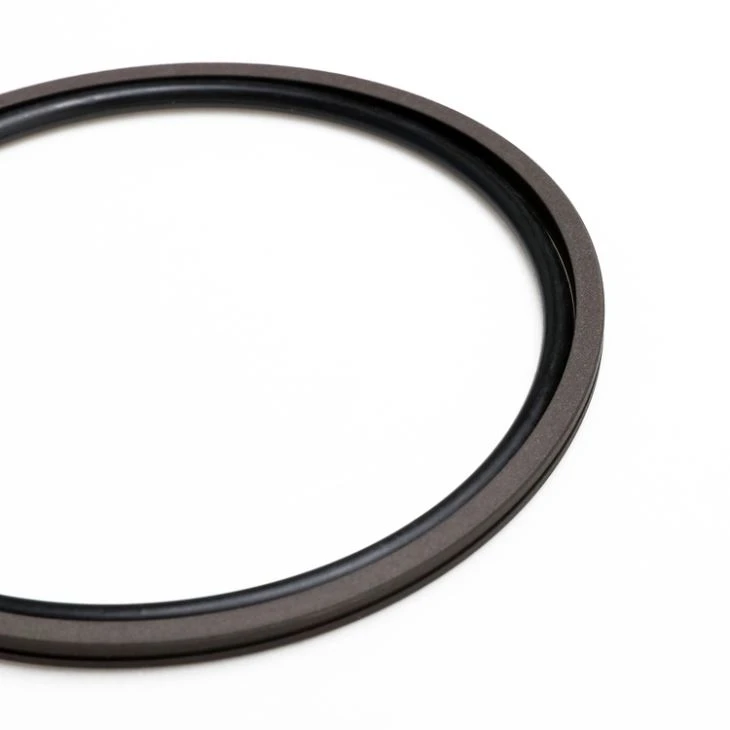

Now, let's take a closer look at how these components work together to create a seal. When the seal is installed, the sealing lip is pressed against the shaft. The garter spring applies pressure to the lip, creating a tight seal between the lip and the shaft. As the shaft rotates, the lip rides on the surface of the shaft, maintaining the seal.
The secondary sealing element, such as the dust lip or static seal, helps to enhance the overall sealing performance. The dust lip keeps contaminants out, while the static seal prevents fluid from leaking out around the edges of the seal.
One of the advantages of Rotary Compact Seals is their compact design. They're smaller and lighter than traditional seals, which makes them ideal for applications where space is limited. They also require less installation space, which can help to reduce the overall size and weight of the equipment.
Another advantage is their high performance. Rotary Compact Seals are designed to provide a reliable seal under a wide range of operating conditions. They can withstand high temperatures, pressures, and speeds, making them suitable for use in demanding applications.
If you're in the market for Rotary Compact Seals, we've got you covered. We offer a wide range of Rotary Compact Seals to suit your specific needs. Whether you're looking for a seal for an automotive engine, a hydraulic system, or an industrial machine, we have the right product for you.
We also offer Rod Rotary Shaft Seals and Piston Rotary Shaft Seals, which are designed for specific applications. These seals are made from high-quality materials and are engineered to provide a long-lasting, reliable seal.
If you have any questions about our products or need help choosing the right seal for your application, don't hesitate to contact us. We have a team of experts who are ready to assist you. We can provide you with technical information, product recommendations, and pricing.
In conclusion, the sealing mechanism of Rotary Compact Seals is a combination of the sealing lip, garter spring, and secondary sealing element. These components work together to create a tight, reliable seal that prevents fluid leakage and keeps contaminants out. If you're in need of a high-quality seal for your application, consider Rotary Compact Seals from our company. Contact us today to discuss your requirements and start the procurement process.
References:
- "Sealing Technology Handbook" by John H. Birkle
- "Rotary Shaft Seals: Design, Selection, and Application" by Klaus-Dieter Hutmacher