

Abrasion resistance is a critical property for wiper seals, especially in demanding industrial applications. As a leading supplier of PTFE Wiper Seals, I am often asked about the abrasion resistance of these seals. In this blog post, I will delve into what abrasion resistance means for PTFE wiper seals, how it is measured, the factors that affect it, and why it is so important in various industries.
Understanding Abrasion Resistance
Abrasion resistance refers to a material's ability to withstand the wear and tear caused by friction, scraping, or rubbing against other surfaces. In the context of PTFE wiper seals, it is the capacity of the seal to resist damage when in contact with a moving shaft or rod, which may carry contaminants such as dirt, dust, and debris. When a wiper seal has high abrasion resistance, it can maintain its integrity and functionality over an extended period, even under harsh operating conditions.
Measuring Abrasion Resistance of PTFE Wiper Seals
There are several methods to measure the abrasion resistance of PTFE wiper seals. One common approach is the Taber Abraser test. In this test, a sample of the PTFE material is mounted on a rotating platform, and a weighted abrasive wheel is pressed against the sample. The platform rotates, causing the wheel to abrade the surface of the sample. After a specified number of rotations, the weight loss of the sample is measured. A lower weight loss indicates higher abrasion resistance.
Another method is the pin - on - disk test. In this test, a pin made of the PTFE material is pressed against a rotating disk. The disk has a specific surface roughness, and the test is run for a set period or number of revolutions. The wear volume of the pin is then measured. This test simulates the real - world scenario where the wiper seal rubs against a moving shaft.
Factors Affecting the Abrasion Resistance of PTFE Wiper Seals
PTFE Material Quality
The quality of the PTFE material used in the wiper seals is a primary factor. High - quality PTFE has a more uniform molecular structure, which provides better resistance to abrasion. Some manufacturers may add fillers to PTFE to enhance its properties. For example, glass fiber, carbon fiber, or bronze fillers can improve the abrasion resistance of PTFE. These fillers act as reinforcement, making the material more resistant to the forces exerted during abrasion.
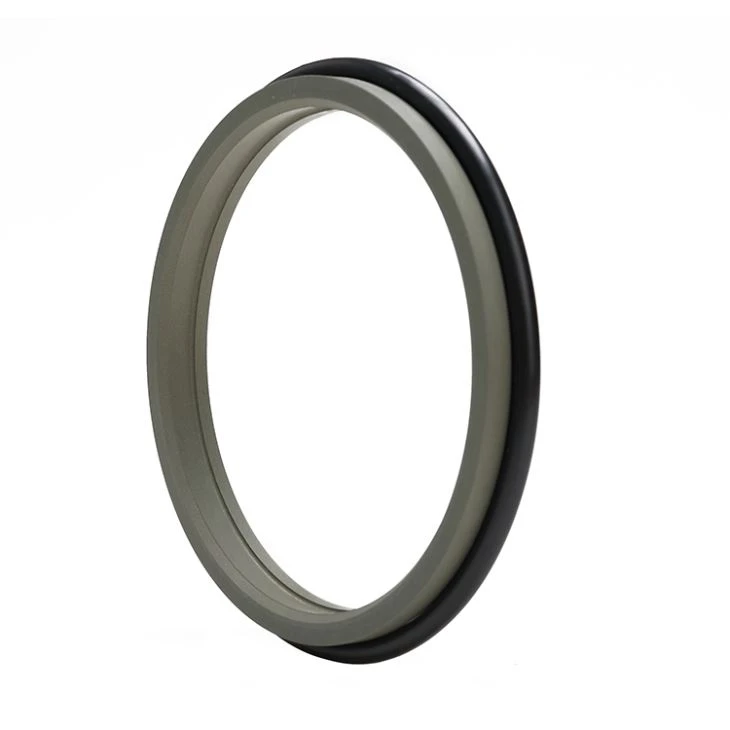

Surface Finish of the Shaft or Rod
The surface finish of the shaft or rod that the wiper seal contacts also affects its abrasion resistance. A rough surface will cause more friction and wear on the seal compared to a smooth surface. Therefore, it is important to ensure that the shaft or rod has an appropriate surface finish. Generally, a surface roughness of Ra 0.2 - 0.8 micrometers is recommended for optimal performance of PTFE wiper seals.
Operating Conditions
The operating conditions play a significant role in the abrasion resistance of PTFE wiper seals. High - speed applications generate more heat and friction, which can accelerate the wear of the seal. Similarly, high - pressure environments can increase the contact force between the seal and the shaft, leading to more abrasion. Additionally, the presence of contaminants such as sand, dirt, or metal particles can act as abrasives, further increasing the wear on the seal.
Importance of Abrasion Resistance in Different Industries
Hydraulic and Pneumatic Systems
In hydraulic and pneumatic systems, PTFE wiper seals are used to prevent contaminants from entering the system. If the wiper seal has poor abrasion resistance, it will wear out quickly, allowing dirt and debris to enter the system. This can cause damage to other components such as pistons, cylinders, and valves, leading to system failure. High - abrasion - resistant PTFE wiper seals ensure the long - term reliability and performance of hydraulic and pneumatic systems.
Automotive Industry
In the automotive industry, PTFE wiper seals are used in various applications, including shock absorbers and steering systems. These seals need to withstand the constant movement of components and the presence of road dust and debris. A wiper seal with good abrasion resistance can prevent leaks and ensure the smooth operation of these critical automotive components.
Food and Pharmaceutical Industries
In the food and pharmaceutical industries, PTFE wiper seals are used in equipment where hygiene is of utmost importance. The seals need to be resistant to abrasion to prevent the generation of particles that could contaminate the products. Additionally, the seals must be able to withstand cleaning and sterilization processes without significant wear.
Our PTFE Wiper Seals and Abrasion Resistance
As a supplier of PTFE Wiper Seals, we take great pride in the abrasion resistance of our products. We use high - quality PTFE materials and carefully select the appropriate fillers to enhance the abrasion resistance of our seals. Our manufacturing process ensures that the seals have a uniform structure and a precise fit, which further contributes to their abrasion resistance.
We also offer a range of other wiper seals, such as Scraper PU Seal and Double Acting Wiper Seals, which are designed to meet different application requirements. Whether you need a seal for a high - speed hydraulic system or a hygienic food processing equipment, we have the right solution for you.
Contact Us for Your Wiper Seal Needs
If you are in the market for high - quality wiper seals with excellent abrasion resistance, we would love to hear from you. Our team of experts can help you select the right seal for your specific application. We offer competitive pricing, fast delivery, and outstanding customer service. Contact us today to start a discussion about your wiper seal requirements and let us provide you with the best sealing solutions.
References
- "Handbook of Seal Technology" by John H. Bickford
- "Tribology of Polymers and Composites" edited by B. Bhushan
- Technical papers on PTFE materials and seal performance from industry - leading manufacturers.